I keep thinking about Kosuths one and three chairs I'm not sure why. I made a homage to it in my seminal work "four representations of breakfast - non of them real"
 I keep putting this on the Blog as it's possibly the last thing I made which looks like art and even then it only just looks like art - it was the start of the pedagogic turn but most of the art world past it by. Anyway perhaps I should paraphrase my own title
Three representations of studio- non of them real.

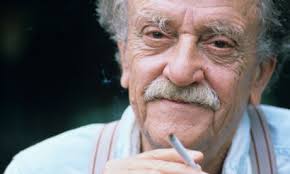
Dear Miller:
Thought, rather fuzzily, about something I want to add to my recent letter to you. It’s this business about the school: school of painting, school of poetry, school of music, school of writing. For a couple of years after the War I was a graduate student in the Anthropology Department at the University of Chicago. At the instigation of a bright and neurotic instructor named Slotkin, I got interested in the notion of the school (I’m going to explain what I mean in a minute), and decided to do a thesis on the subject. I did about 40 pages of the thing, based on the Cubist School in Paris, and then got told by the faculty that I’d better pick something more strictly anthropological. They suggested rather firmly (with Slotkin abstaining) that I interest myself in the Indian Ghost Dance of 1894. Shortly thereafter I ran out of money and signed on with G-E, and I never did get past the note-taking stage on the Ghost Dance business (albeit damn interesting).
But Slotkin’s notion of the importance of the school stuck with me, and it now seems pertinent to you, me, Knox, McQuade, and anybody else whose literary fortunes we take a personal interest in. What Slotkin said was this: no man who achieved greatness in the arts operated by himself; he was top man in a group of like-minded individuals. This works out fine for the cubists, and Slotkin had plenty of good evidence for its applying to Goethe, Thoreau, Hemingway, and just about anybody you care to name.
If this isn’t 100% true, it’s true enough to be interesting—and maybe helpful.
The school gives a man, Slotkin said, the fantastic amount of guts it takes to add to culture. It gives him morale, esprit de corps, the resources of many brains, and—maybe most important—one-sidedness with assurance. (My reporting what Slotkin said four years ago is pretty subjective—so let’s say Vonnegut, a Slotkin derivative, is saying this.) About this one-sidedness: I’m convinced that no one can amount to a damn in the arts if he becomes sweetly reasonable, seeing all sides of a picture, forgiving all sins.
Slotkin also said a person in the arts can’t help but belong to some school—good or bad. I don’t know what school you belong to. My school is presently comprised of Littauer & Wilkenson (my agents), and Burger, and nobody else. For want of support from any other quarter, I write for them—high grade, slick bombast.
I’ve been on my own for five weeks now. I’ve rewritten a novelette, and turned out a short-short and a couple of 5,000-worders. Some of them will sell, probably. This is Sunday, and the question arises, what’ll I start tomorrow? I already know what the answer is. I also know it’s the wrong answer. I’ll start something to please L&W, Inc., and Burger, and, please, God, MGM.
The obvious alternative is, of course, something to please the Atlantic, Harpers, or the New Yorker. To do this would be to turn out something after the fashion of somebody-or-other, and I might be able to do it. I say might. It amounts to signing on with any of a dozen schools born ten, twenty, thirty years ago. The kicks are based largely on having passed off a creditable counterfeit. And, of course, if you appear in the Atlantic or Harpers or the New Yorker, by God you must be a writer, because everybody says so. This is poor competition for the fat checks from the slicks. For want of anything more tempting, I’ll stick with money.
So, having said that much, where am I? In Alplaus, New York, I guess, wishing I could pick up some fire and confidence and originality and fresh prejudices from somewhere. As Slotkin said, these things are group products. It isn’t a question of finding a Messiah, but of a group’s creating one—and it’s hard work, and takes a while.
If this sort of thing is going on somewhere (not in Paris, says Tennessee Williams), I’d love to get in on it. I’d give my right arm to be enthusiastic. God knows there’s plenty to write about—more now than ever before, certainly. You’re defaulting, I’m defaulting, everyone’s defaulting, seems to me.
If Slotkin’s right, maybe the death of the institution of friendship is the death of innovation in the arts.
This letter is sententious crap, shot full of self-pity. But it’s the kind of letter writers seem to write; and since I quit G-E, if I’m not a writer then I’m nothing.
Yours truly,
Kurt
Three representations of studio- non of them real.
This research project will explore how artists
work within the AHRC Connected Communities programme. The programme has encouraged arts and
humanities academics to work in different ways with communities to co-produce
research across a range of disciplines. Many academics have worked with artists
to realize ideas and help with a community engaged approach to research. At the
same time artists have framed, challenged and theoretically informed engaged
research.
The project is led by Kate Pahl, Helen
Graham, Steve Pool and Amanda Ravetz. It combines established research methods with an innovative open ended
‘studio’ form of enquiry aimed at understanding how artists have been working
across a range of Connected Communities projects. The studio methodology asks
how artists come to know and which theories of change they carry with them when
working with communities.
The project team will work with Castlefield
Art Gallery, A-N artists network, Arts Council England and the AHRC Connected
Communities leadership fellows to generate and disseminate findings.
The full project team include: Kate Pahl,
Steve Pool, Amanda Ravetz, Helen Graham with Richard Steadman-Jones, William
Gould, Irna Qureshi, Zahir Rafiq, Marcus Hurcombe, Kate Genever, Graham
Jeffery, Anne Douglas, Johan Siebers, James Oliver, Katie Hill, Tessa Holland.
Research assistants: Hugh Escott and
Kimberley Marwood
The project lasts for one year, from
February 2014 –January 2015 and is an AHRC Connected Communities development
grant (£79,665.05)
and then where it all came from
Important letter

I read this letter a couple of weeks ago on the train to London and it
has really stuck in my mind in terms of our Studio idea. I don't know
if you have heard of Slotkin but it is interesting that Kurt Vonnegut
failed to get his Anthropology Doctorate. Anyway have a read and let me
know what you think.
February 11, 1951
Dear Miller:
Thought, rather fuzzily, about something I want to add to my recent letter to you. It’s this business about the school: school of painting, school of poetry, school of music, school of writing. For a couple of years after the War I was a graduate student in the Anthropology Department at the University of Chicago. At the instigation of a bright and neurotic instructor named Slotkin, I got interested in the notion of the school (I’m going to explain what I mean in a minute), and decided to do a thesis on the subject. I did about 40 pages of the thing, based on the Cubist School in Paris, and then got told by the faculty that I’d better pick something more strictly anthropological. They suggested rather firmly (with Slotkin abstaining) that I interest myself in the Indian Ghost Dance of 1894. Shortly thereafter I ran out of money and signed on with G-E, and I never did get past the note-taking stage on the Ghost Dance business (albeit damn interesting).
But Slotkin’s notion of the importance of the school stuck with me, and it now seems pertinent to you, me, Knox, McQuade, and anybody else whose literary fortunes we take a personal interest in. What Slotkin said was this: no man who achieved greatness in the arts operated by himself; he was top man in a group of like-minded individuals. This works out fine for the cubists, and Slotkin had plenty of good evidence for its applying to Goethe, Thoreau, Hemingway, and just about anybody you care to name.
If this isn’t 100% true, it’s true enough to be interesting—and maybe helpful.
The school gives a man, Slotkin said, the fantastic amount of guts it takes to add to culture. It gives him morale, esprit de corps, the resources of many brains, and—maybe most important—one-sidedness with assurance. (My reporting what Slotkin said four years ago is pretty subjective—so let’s say Vonnegut, a Slotkin derivative, is saying this.) About this one-sidedness: I’m convinced that no one can amount to a damn in the arts if he becomes sweetly reasonable, seeing all sides of a picture, forgiving all sins.
Slotkin also said a person in the arts can’t help but belong to some school—good or bad. I don’t know what school you belong to. My school is presently comprised of Littauer & Wilkenson (my agents), and Burger, and nobody else. For want of support from any other quarter, I write for them—high grade, slick bombast.
I’ve been on my own for five weeks now. I’ve rewritten a novelette, and turned out a short-short and a couple of 5,000-worders. Some of them will sell, probably. This is Sunday, and the question arises, what’ll I start tomorrow? I already know what the answer is. I also know it’s the wrong answer. I’ll start something to please L&W, Inc., and Burger, and, please, God, MGM.
The obvious alternative is, of course, something to please the Atlantic, Harpers, or the New Yorker. To do this would be to turn out something after the fashion of somebody-or-other, and I might be able to do it. I say might. It amounts to signing on with any of a dozen schools born ten, twenty, thirty years ago. The kicks are based largely on having passed off a creditable counterfeit. And, of course, if you appear in the Atlantic or Harpers or the New Yorker, by God you must be a writer, because everybody says so. This is poor competition for the fat checks from the slicks. For want of anything more tempting, I’ll stick with money.
So, having said that much, where am I? In Alplaus, New York, I guess, wishing I could pick up some fire and confidence and originality and fresh prejudices from somewhere. As Slotkin said, these things are group products. It isn’t a question of finding a Messiah, but of a group’s creating one—and it’s hard work, and takes a while.
If this sort of thing is going on somewhere (not in Paris, says Tennessee Williams), I’d love to get in on it. I’d give my right arm to be enthusiastic. God knows there’s plenty to write about—more now than ever before, certainly. You’re defaulting, I’m defaulting, everyone’s defaulting, seems to me.
If Slotkin’s right, maybe the death of the institution of friendship is the death of innovation in the arts.
This letter is sententious crap, shot full of self-pity. But it’s the kind of letter writers seem to write; and since I quit G-E, if I’m not a writer then I’m nothing.
Yours truly,
Kurt
So the Ruskin Studio ends Kate is off on the Clore the AHRC Studio projects starts and we set sail again on the winds of fortune. But I think perhaps we are building something bigger than the sum of the parts and this is essentially the job in hand. I think the Ruskin project has taken us to the place we wanted to get but when we have arrived we are finding it hard to recognise. I wrote an email which I lost and found again which I described as an epiphany while walking the dog. I think it basically said that we need to work how things fit together. For me this is removing the grid of the world which we navigate and replacing it with a ground - I didn't realise the words play till I wrote it but it is clever now. Drawing as inscription drawing as in drawing out drawing as in drawing on. I'm reading a bit about Alan Turing .
I was drawn to him as a teenager by this clip in bladerunner
Turing describes the human brain as a discrete state machine well I'm not sure he does he more explains what may be possible within computing if we conceive it as such. Turn is essentially a mathematician and early on in Maths training there is a need to except certain things in order to progress. Bertrand Russul describes his problems as a boy aged 11 struggling with the problems of Euclidean mathmatics - the primes and loads of shit which you have to accept to move forward in the field. So what Turin kind of says is the brain is a series of on and offs and it's just very complicated. So a computer which is also a discrete state machine can develop intelligence hence the Turin test in Blade runner. Turin however goes one step further and suggest that it doesn't matter if you are a replicant or not what matters is if you pass the test. This is why it's so ironic that the film company forced them to change the end of the film - for Turin and perhaps Philip K Dick the point is it doesn't matter if you are a machine or not what matters is whether you demonstrate intelligence.
I'm putting these thoughts here as within my Blogs this is the only space it really fits but it doesn't really fit but here is my dream from another project. but Kate gets a mention
My Dreams
Do Androids Dream of
Electric Sheep?
Philip K Dicks book is
best read as a teenager – you need to be open to falling into a complete world
with very little description and then find a way through it. The “Ways of knowing” project felt like
this. A group of people all in their very complex constructed worlds that at
times didn’t make sense to each other.
The only way to read Philip K Dick novels or attend cross-disciplinary
projects about the nature of knowledge is to learn to go with the flow. I
suppose in a practical way I dream of being able to do this better. To make a
world on the edge of holding something come to life so I can feel more present
in it.
If Androids dream of electric sheep what
do artists dream of? Stuffed sharks and Grayson Perry? Just like the Androids in the book I probably
dream of a world where we forget what we are and get chance to work out who we
are.
When I work with
collaborator Kate Genever on artists development and training we go back to our
art college days and often treat situations as an artists Crit group. There are many questions to ask of
people in the Crit but the best ones are all single words and are about work.
“Where ?”
“Why ?”
“More ?”
“Less ?”
“More ?”
“More ?”
I dream of a place
where we can get further, know why and have both less and more. I dream of a
world where we can get closer to seeing where the work is.
Comments
Post a Comment